
 How to resolve AdBlock issue?
 ‘Why we can’t stop chasing status’ – author David Moloney gets to the Points
 Loyalty program points – commonly referred to by Australians as ‘my frequent flyers’ – are today as integrated into the business economic landscape as they are held as an item of closely guarded personal wealth and, when travelling, personal status. They are a highly prized life enhancement item that is available to the masses – and good businesses know how to use them to build both customer and staff loyalty. In his new book Points: Mastering the Game of Frequent Flyers, author David Moloney takes readers behind the scenes of the loyalty programs that have become part of everyday Australian life, revealing how they began, how they influence our behaviour and the economy, and how to get the most from the points we collect. In this Business Acumen exclusive extract, Mr Moloney explores why airline status taps into our deep human need for recognition and belonging. He writes:
DON’T FEEL GUILTY if status really does matter to you. Social comparison theory is a big field in human psychology. Chasing that elusive next tier isn’t superficial – it’s a status trap, and it’s part of human nature.
Nobel laureate economist John Harsanyi observed that beyond economic rewards, social status is one of the most powerful motivators of human behaviour. Academics Joey T. Cheng and Gerben A. van Kleef note that the desire for social rank is a fundamental human motive, tied to autonomy, wellbeing, self esteem, social acceptance and access to resources.
There is even a term for it: ontological security. Knowing where we sit – in life as well as on a plane – reduces conflict and provides a sense of belonging.
Status-signalling
The world-renowned Gold Museum in Bogotà is famous for its unrivalled gold collection, much of which is focused on status symbolisation, with surprisingly large nose ornaments, breastplates and ceremonial items worn by priests and rulers to display their authority and social hierarchy to those around them.
When we started to travel, we understandably wanted to communicate our status just as clearly.
From the earliest distinctions between public and private sedan chairs to the British royal family’s carriages (several of which are actually made in Australia), to the two-tone paintwork of early Rolls-Royces and modern Maybachs, status-signalling is on the move.
The three-class system from early stagecoaches transferred to ships, then to trains and finally to planes, until the terms first, second and third class became too politically incorrect and the powers that be decided to change third class to ‘economy’, ‘budget’, ‘coach’ or, as my comedian friend Rodney Marks likes to put it, ‘David, you were put out to pasture in cattle class’.
The classes of travel have continued to multiply
I remember when my kids could first cope with major jet lag and we twigged that skiing in Italy was cheaper than anywhere else, and watched the irony of our Platinum-Status-tagged luggage disappear on the conveyor belt with a bright yellow first-class premium tag on it while the whole family turned right at first, then walked through business, then premium economy to our lowly fourth-tier economy seats, my son asking loudly, ‘Daddy, why don’t you get a job that lets us sit in the nice seats?’
Seeing the world-famous chef Heston Blumenthal sitting happily with his family just a few rows ahead of us made my wife and I feel better, though.
The next class innovation has already been announced: low-cost airlines hope to introduce standing room or ‘perch-style’ seating in 2027 for short-haul routes, bringing new meaning to the phrase ‘packed in like sardines’.
The more visible status differences are, the more people obsess over them. Airlines reinforce this through priority boarding, highly visible lounges, tiered dining experiences within lounges, accelerated points progression, personal recognition (such as greetings from crew), and segmented service channels and support access.
Irrespective of the product, it turns out that climbing loyalty status ladders is like climbing real ladders: there are inherent, measurable health benefits (and detriments) of acting within such a system, not least shared identity and tribalism.
This is all great if you’re in the ‘in group’, but there is a flipside – the ‘status anxiety’ we can feel when we’re othered, even at an airport.
Status anxiety
Status has been proven to affect us at a neuroendocrinological level. The threat of lowering status is associated with higher levels of cortisol, aka the stress hormone, which is why the dreaded ‘your status tier is expiring soon’ email spikes your heart rate.
One study has also demonstrated that social rank is associated with cardiovascular, respiratory, rheumatoid and psychiatric disease.
As author Alain de Botton says in his book aptly titled Status Anxiety, many of us experience ‘an anxiety about what others think of us; about whether we’re judged a success or a failure, a winner or a loser’. And this can influence our behaviour, including who we choose to fly with and how often we take to the skies.
No judgement here; I’m no stranger to the status race myself. However, as I’ve got older, I’ve learned it all comes down to balance and perspective. There are many games of life, and it’s important to remember that health, family and career outrank loyalty status by orders of magnitude.
A recent podcast episode by an up-and-coming US commentator said it all. Having just won not one but two new major speaking engagements, he rushed to tell his wife the good news. After a long pause, she said, ‘I am very pleased and excited for you, congratulations. But know that we already have sufficient resources for our family, so any further time you spend away from us earning more income is not for us; it’s for your ego.’
Ouch! So, chasing status is a double-edged sword. It can be very expensive, especially in opportunity cost. 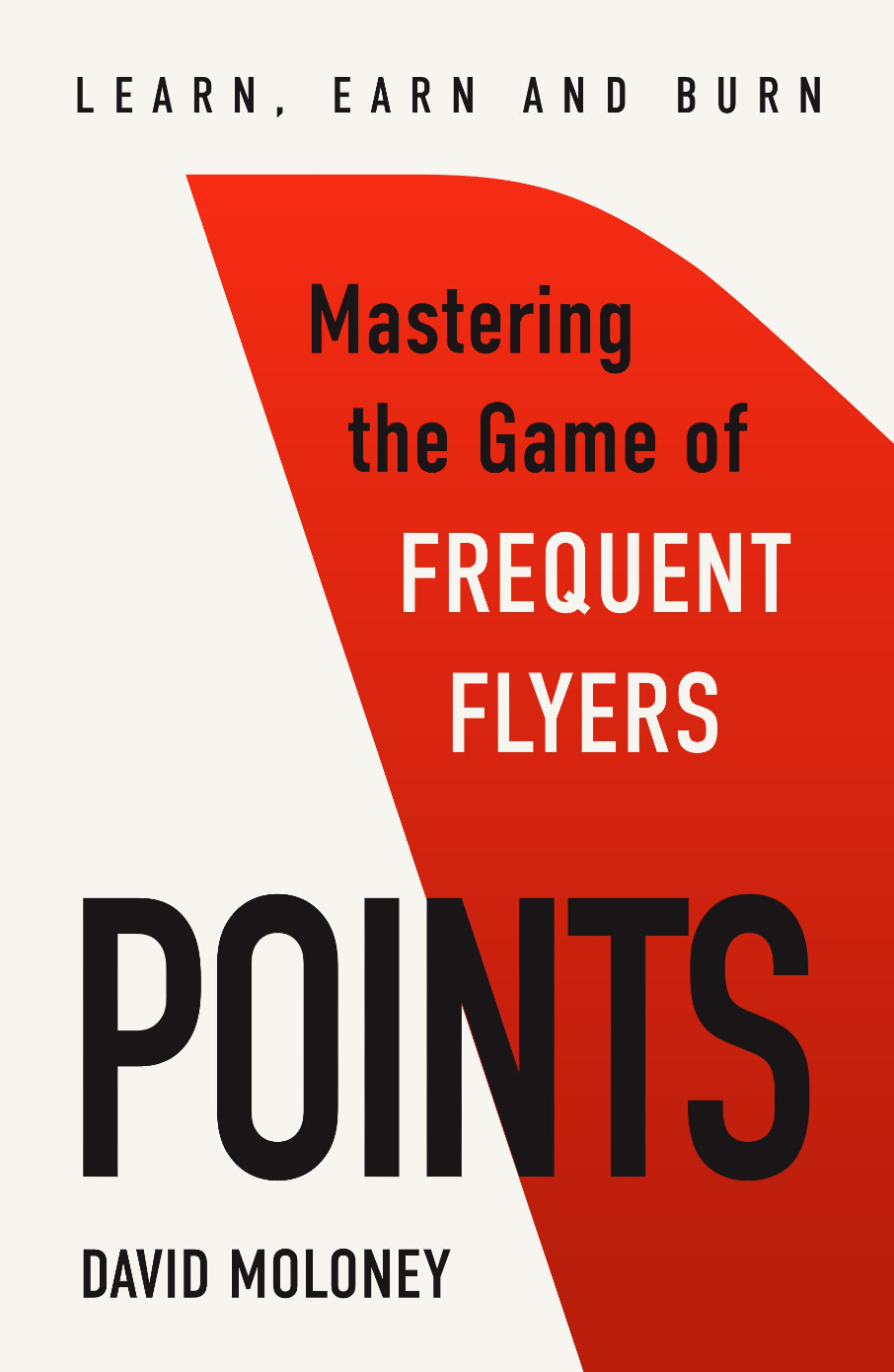
About David Moloney’s Points
This is an edited extract from Points: Mastering the Game of Frequent Flyers by David Moloney, one of Australia’s most experienced management consultants and CEO of global consulting firm internalconsulting.com (ICG). Points was released by Major Street Publishing on September 29 (RRP $34.99) and takes readers behind the scenes of the loyalty programs that have become part of everyday Australian life, exploring how they began, how they influence our behaviour and the economy, and how to optimise your points gameplay. Find out more from David Moloney’s experience and research at https://www.david-moloney.com/
ends