
 How to resolve AdBlock issue?
HIA warns new homes sales slump puts housing supply under pressure next year
HOUSING Industry Association (HIA) chief economist, Tim Reardon, has warned that a fall in October new home sales of 19.3%, with declines in all five states surveyed, is pointing towards a stunted supply of new homes in 2027.
The HIA New Home Sales report is a monthly survey of the largest volume home builders in the five largest states and is a leading indicator of future detached home construction.
In the three months to October, the report showed Western Australia was the only state to see an increase in new home sales, remaining relatively unchanged (+0.3%), with a modest decline in South Australia (-4.3%). The larger declines were seen in Queensland (-36.8%), followed by, New South Wales (-24.5%) and Victoria (-16.1%).
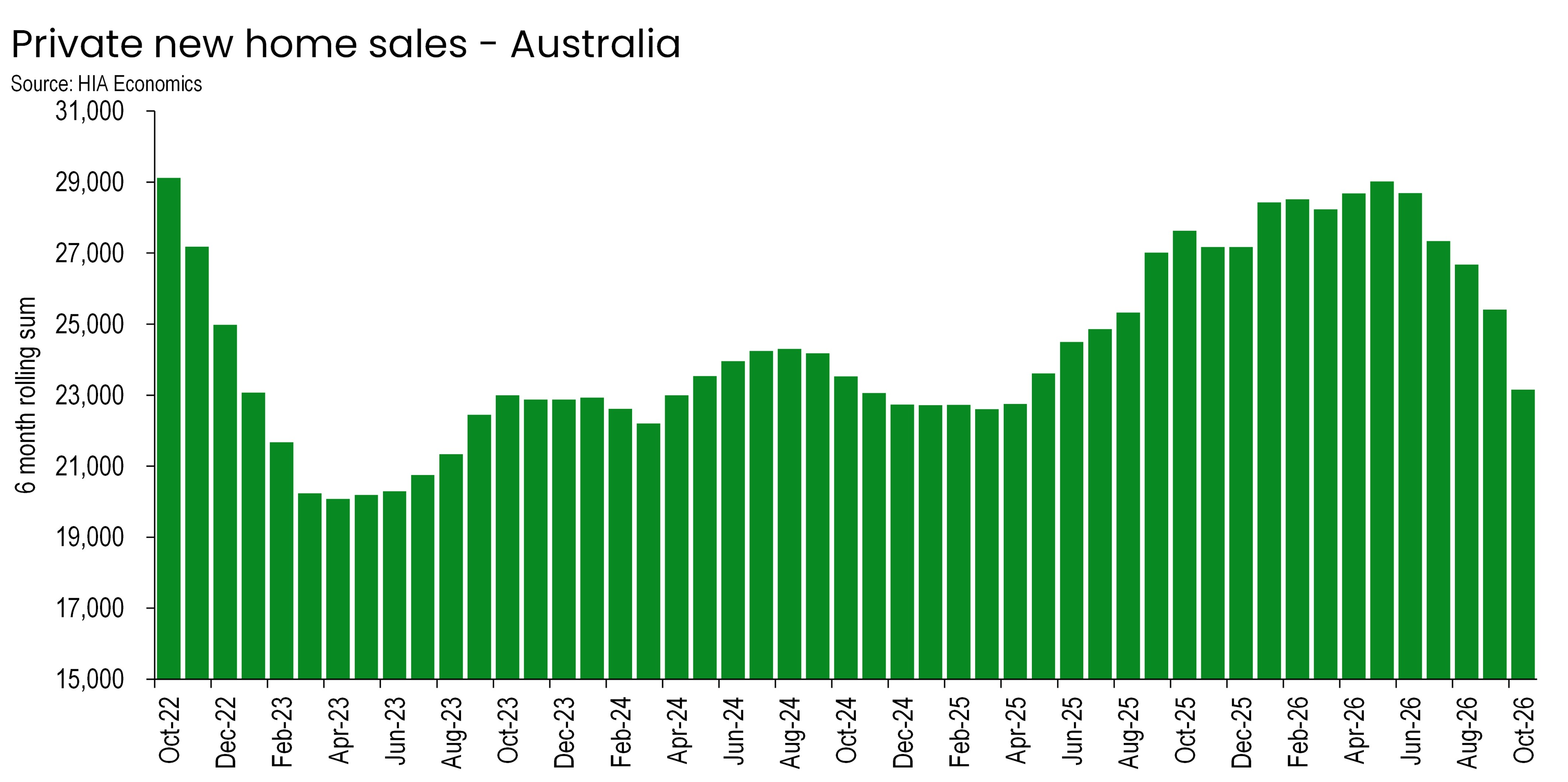
“Sales of new homes in the three months to October were 17.4% lower than in the preceding three months and 27.3% lower than in the same period a year earlier,” Mr Reardon said.
“This slump in sales was before the November rate increase. It can take up to six months for the full effect of a rate increase to show up in new home sales.
“Builders continue to report a decline in visits to display villages and enquiries suggesting continued weakness in sales trends is likely until at least the end of the year,” Mr Reardon said.
“Higher interest rates are reducing how much households can borrow. Falling established home prices and rising construction costs are making it harder for buyers to justify building a new home. Changes to negative gearing and capital gains tax have added to uncertainty for investors.
“Sales of new homes have been declining since April,” he said.
“Stronger sales earlier this year gave builders a pipeline of work that will help sustain home building into 2027. If sales remain weak, fewer new contracts will replace the work already on builders’ books.
“Recent improvements in ABS building approvals and commencements data reflect stronger sales earlier in the year. The slump in new home sales data is likely to emerge in building approvals data in March quarter 2027.
“Unless market conditions improve early in 2027, we expect detached home commencements to fall from around the middle of next year,” Mr Reardon said.
“Ring-fencing investment in new homes, from the recent tax increases, does not mean there will be an increase in investment in building new homes. Just as a tax on used cars doesn’t lead to increased investment in new cars, tax increases on established homes are also expected to reduce new home supply.
“The Federal Budget papers in May 2026 advise that the increased taxes on investors in the established market will reduce housing supply by around 35,000 homes over the decade.
“The ban on self-managed superannuation funds borrowing to build new homes is another adverse factor impacting new home sales,” he said.
“By the time the full impact of higher interest rates and this year’s Budget changes impact the volume of homes commencing construction, builders will have already scaled back employment, and some skilled trades may have moved to other sectors.
“Home building has been through repeated cycles of boom and bust over the past decade. That uncertainty makes it harder for builders to invest in their businesses and take on apprentices. When buyers regain the confidence to have a new home built, it takes time for the industry to rebuild the capacity to deliver the homes they need,” Mr Reardon said.
ends