TPL_YOOTHEME_SKIP_TO_MAIN_CONTENT

Travel, Tourism & Events

Global housing leaders gather in Melbourne to tackle their 'home' challenges

HOUSING INDUSTRY LEADERS from across the world will convene at Victoria's Parliament House in Melbourne on Thursday and Friday, August 27-28, for a meeting of the International Housing Association (IHA).

This conference brings together representatives from Australia, Brazil, Canada, Ireland, Japan, Norway, Taiwan, the UK and the US.

Recent years have reinforced the importance of international collaboration. From the Covid-19 pandemic to geopolitical disruptions affecting global supply chains, labour markets and economic activity, nations have experienced first-hand how interconnected economies, industries and communities have become.

These events have highlighted the value of sharing knowledge, building resilience and working together to address common challenges, including the delivery of safe, affordable and sustainable housing.

Common housing challenges

Participating nations face many common housing challenges, including declining housing affordability, housing supply constraints, workforce and skills shortages, increasing regulatory complexity, productivity pressures and the impacts of a changing climate.

The two-day meeting will provide an important opportunity for governments, industry leaders and housing experts to share experiences and explore practical solutions that can accelerate housing delivery while improving quality, sustainability and affordability.

A key focus of discussions will be the role of innovation in transforming housing and construction outcomes. Delegates will examine how modern methods of construction (MMC), advanced manufacturing, digital technologies and artificial intelligence can help boost productivity, reduce project delivery times, strengthen supply chains and support the delivery of more affordable homes.

The gathering reflects a growing recognition that housing challenges are increasingly global in nature and require collaboration across borders to identify and scale successful solutions. Jocelyn Martin HIA

Critical moment for housing worldwide

HIA managing director Jocelyn Martin said the meeting comes at a critical time for housing systems around the world.

“The lessons of recent years are clear our economies, supply chains and housing markets are more interconnected than ever before,” Ms Martin said.

“While each nation faces unique circumstances, we share many of the same challenges, including housing affordability, workforce shortages, productivity pressures, increasing regulatory complexity and the need to accelerate housing supply.

“This meeting provides an invaluable opportunity to learn from international experience, exchange ideas and identify practical solutions that can help deliver more homes, more efficiently and more sustainably.

“Innovation will be central to these discussions. From modern methods of construction and advanced manufacturing to artificial intelligence and digital technologies, there is enormous potential to transform the way we plan, design and build housing,” she said.

“By bringing together housing leaders from across the globe, we can learn from each other’s successes, strengthen international partnerships and help shape the future of housing for the benefit of communities everywhere.”

Delegates will hear case studies from leading housing and construction markets, focusing on emerging technologies, policy reform, industrialised construction, workforce development and strategies to improve housing outcomes for communities.

Ms Martin said the International Housing Association meeting reinforces Australia’s commitment to international collaboration and knowledge sharing as the housing sector works to meet growing demand, improve productivity and build resilience for the future.

www.hia.com.au

ends

Australia Travel Declaration being rolled out nationwide

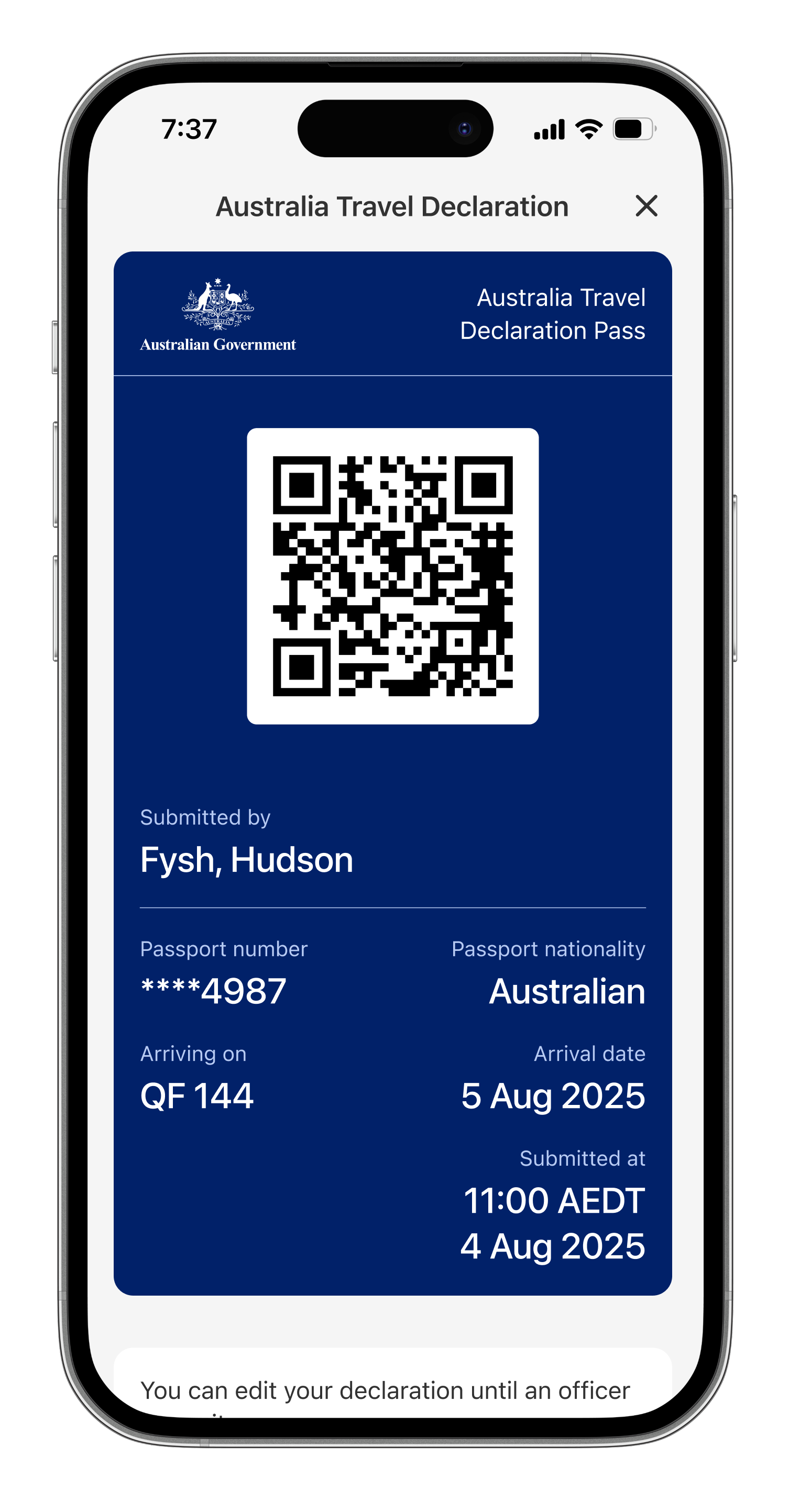
THE Australia Travel Declaration (ATD) will be introduced at all international airports and seaports before the end of 2027 – and the Australian Border Force (ABF) today announced it would be embracing digital credentials and phasing out the paper-based incoming passenger card.

​Since October 2024, the ABF in partnership with the Department of Agriculture, Fisheries, and Forestry (DAFF), and Qantas have been rolling out a pilot in-app capability of the ATD, allowing passengers to pre-fill their digital passenger card up to 72-hours ahead of travel to Australia. Australian Travel Declaration ATD

The current pilot program will be rolled out across inbound international Qantas flights at remaining capital cities – including Perth and Adelaide – before the end of 2026.

Following a successful trial period, the Federal Government has committed $56.1 million over the next four years from 2026/2027 to roll out a ‘webform’ format of the ATD for all international airport and seaports.

The national rollout of the ATD will reduce manual processes for passengers, enable secure and pre-vetted digital collection of information, allow prompt updates to questions and management of global biosecurity risks, and meet passenger expectations for a digital process, a Border Force spokesperson said.

The $56.1 million commitment from the Federal Government also includes several other border modernisation projects to help digitise and streamline Australia’s traveller experience, including exploring co-located domestic and international airport models, a contactless arrivals clearance process, and streamlined baggage processing for internal domestic transfers.

ABF Commissioner Gavan Reynolds said this was a milestone moment for the agency, striving towards a seamless digital border experience.

“A 21st century society deserves a 21st century border, and moving from paper and pen to a webform mobile format is an excellent leap forward for Australia,” Commissioner Reynolds said.

“The ABF welcomes any and all investment into our Australian border. We want Australians and travellers alike to step through our airports with ease and convenience, we want to make their journey as seamless as possible.

“This digital passenger card has been years in the making, and I want to thank every member of the agency, the Department of Home Affairs, and industry – in particular Qantas – for bringing this to fruition.

“The unique opportunity to collaborate with industry to deliver this digital offering in the coming years is one which we are proud to champion – working with industry is the benchmark of how we will modernise the border for decades to come.”

www.abf.gov.au

ends

Tourism Council welcomes digital arrival cards for international visitors 

THE Australian Tourism Export Council (ATEC) has welcomed today’s announcement that Australia will replace existing paper Incoming Passenger Cards with a new digital arrival system, describing it as “a positive step towards a more modern visitor experience”. 

ATEC managing director Peter Shelley said the move reflected the expectations of today’s international travellers and “would help strengthen Australia’s competitiveness as a destination”.  Peter Shelley

“International travellers increasingly expect a seamless digital experience, and this is a sensible improvement that will make arriving in Australia easier and more efficient,” Mr Shelley said. 

“While the arrival card is only one part of the journey, first impressions matter and a smooth and welcoming arrival experience helps reinforce Australia’s reputation as a world-class destination.”

Mr Shelley said the tourism industry had long supported initiatives that remove unnecessary barriers to travel while maintaining Australia’s strong border security. 

“As Australia continues rebuilding international visitation, every improvement that makes travelling here simpler and more visitor-friendly helps strengthen our competitiveness and we welcome this initiative.”

www.atec.net.au

ends

Transforming a Thai art legacy into a Living Museum attraction

By Ellen Boonstra, Asia correspondent >>>

THAILAND’s contemporary art sector is becoming more established, with a growing network of institutions raising both visibility and professional standards across the country.

In Bangkok, venues such as the Bangkok Art and Culture Centre (BACC), SAC Gallery and Warehouse 30 have helped build a more active and accessible ecosystem.

Beyond the capital, destinations including Khao Yai Art Forest and MAIIAM Contemporary Art Museum are expanding the country’s cultural reach and attracting a broader audience. 

Against this backdrop, the opening of Dib Bangkok in December 2025 represents a notable development. It positions itself as one of the most ambitious contemporary art museums in Thailand and offers a relevant cultural option for visitors seeking a focused, high-quality experience in Bangkok. 

Developed from a private collection

Dib Bangkok is built on the private collection of Petch Osathanugrah, a Thai businessman associated with the Osotspa group who maintained a long-term commitment to contemporary art.

The name ‘Dib’ – derived from the Thai word for ‘raw’ or ‘natural’ – reflects a focus on authenticity and unfiltered experience, principles that shaped both his approach to collecting and the overall direction of the museum.

Over several decades, he assembled one of Thailand’s more significant collections. It brings together works by Thai and international artists that were not widely accessible locally, with the intention of making them available to the public. 

Following his passing in 2023, this vision was carried forward by his son, Purat Osathanugrah, culminating in the opening of the museum two years later.

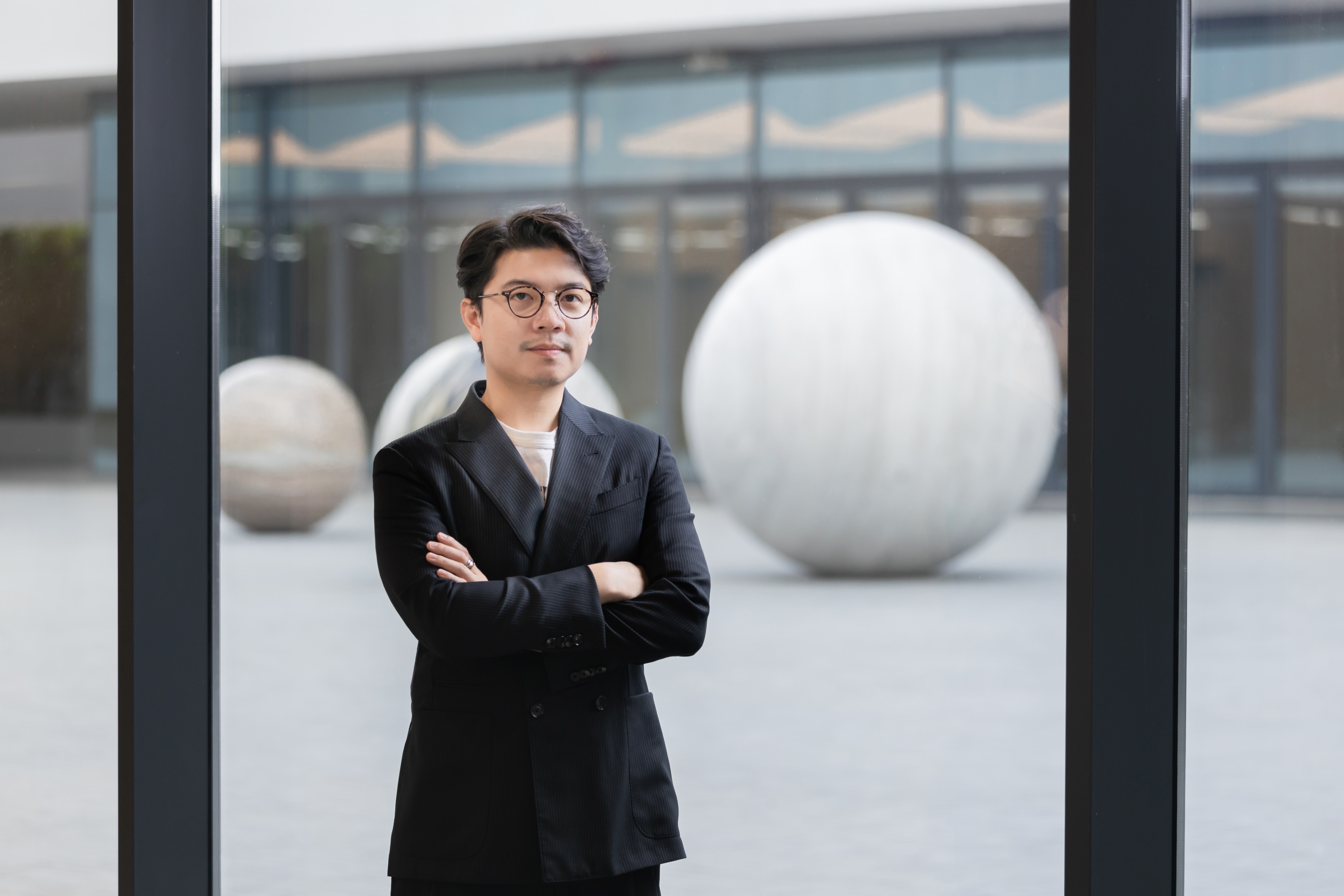
The museum is located between Rama IV Road and Sukhumvit Soi 40 and occupies a converted three-storey warehouse dating from the 1980s.

The redevelopment retains elements of the original industrial structure while upgrading the space to meet current exhibition requirements, creating a functional museum environment aligned with contemporary standards.

The Osathanugrah collection

At its core is the Osathanugrah collection, which includes more than 1,000 works by over 200 artists across a range of media, including painting, sculpture, photography and installation, spanning from the 1960s to the present. 

It is presented through a mix of rotating exhibitions and longer-term displays, allowing different themes to be explored over time.

Artists such as Montien Boonma, Anselm Kiefer and Lee Bul are shown alongside Sho Shibuya and Nobuyoshi Araki, as well as Thai artists including Pinaree Sanpitak and Apichatpong Weerasethakul.

This integrated approach places local work within an international context.

Visitors can interact with art

Several installations introduce an interactive element to the visitor experience, aligning with broader trends in contemporary exhibition design.

Works by Alicja Kwade focus on material and scale, while Marco Fusinato presents a sound-based installation that responds to visitor input. Sculptural works by Paloma Varga Weisz add a narrative dimension.

The inaugural exhibition, (In)visible Presence, runs until August 2026 and is curated by Ariana Chaivaranon under the artistic direction of Dr Miwako Tezuka, whose previous roles in New York bring an international perspective to the program.

The exhibition explores themes of memory and perception while also acknowledging the legacy of the museum’s founder. 

More broadly, Dib Bangkok reflects a wider shift in Thailand’s cultural sector, where private collections are increasingly being developed into public-facing institutions.

www.dibbangkok.org


Writer Ellen Boonstra is Business Acumen magazine's roaming Asia correspondent.


ends.

ACT hoteliers shine at industry night of nights

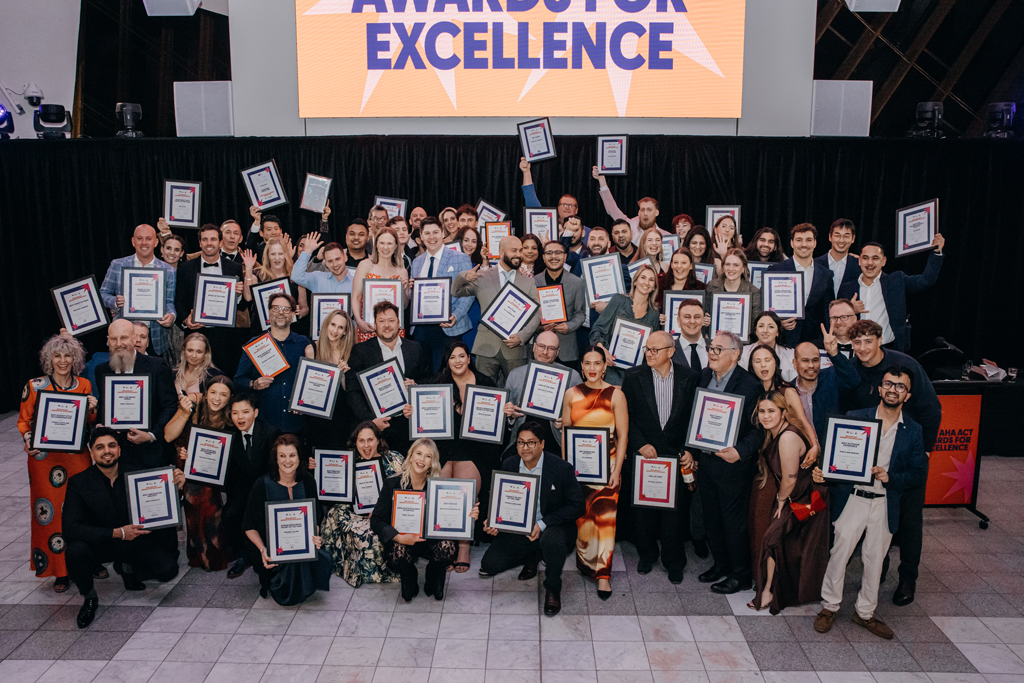
THE BEST of the best of the ACT’s hotel sector shone bright at the recent annual Australian Hotels Association (AHA) ACT Awards for Excellence. 

More than 300 industry and community leaders gathered at the National Museum of Australia on September 22 for a gala cocktail function to honour the best names in Canberra hospitality. 

There were rousing cheers for the big winners: The Dock Kingston won Hotel of the Year (General Division), while the Burbury Hotel took out Hotel of the Year (Accommodation Division).  

Jamala Wildlife Lodge won Deluxe Hotel of the Year and the team from the Little National Hotel Canberra walked away with the Superior Hotel of the Year title.   

The hotly-contested People’s Choice Award went to Caribou Kingston, with thousands of members of the public voting on the winner

There was a lot of pressure on judges in the always close food categories with Best Burger going to BentSpoke Brewing CoMercure Canberra won Best Parmi and  Best Cheap Eat Meal (under $20) and Café Sosta Best Steak Sandwich.  

The Old Canberra Inn walked away with bragging rights to Best Steak.  

Best Casual Dining Experience went to Molto Italian while the popular Louis, Hotel  Realm won Best Restaurant.  

Best Draught Beer Quality was jointly won by Bentspoke Brewing Co. and Capital Brewing Co. (both with perfect scores – an industry first).  

Executive of the Year (General) went to Soumi Tannous of Bar Beirut, while Executive of the Year (Accommodation) went to Stephen Hollow of QT Canberra.  

In a special part of the evening, ACT hospitality icon Michael Capezio (General) and Doma Hotels Kathryn Carling (Accommodation) were both inducted into the Hall of  Fame by AHA ACT General Manager Chris Gatfield.  

“Over a record breaking 26 years as president, Michael established himself as an authoritative voice for our industry, and leaves a long track record of successful  advocacy,” Mr Gatfield said during the ceremony. 

“Kathryn is an evangelist for accommodation, tourism and all things Canberra – her commitment to not just the economic but also the environmental sustainability of our industry marks her as a truly forward-thinking leader.” 

Mr Gatfield said the high quality of all the winning venues showed the Canberra hospitality scene was second to none.

“All of the winners here tonight show the vibrancy of the ACT’s hospitality sector,” Mr Gatfield said. 

“When it comes to quality of staff and venues Canberra really does punch above its weight and that is on ample display here tonight,” he said. 

“I congratulate each and every winner on setting the bar even higher for the 2026 Awards for Excellence.” 

Read the complete list of winners here.


ends

Using AI for more effective travel and expense management

ARTIFICIAL intelligence (AI) is steadily transforming how small, medium, and large-sized businesses manage travel and expense (T&E) processes.

The rise of AI-powered applications is less about futuristic concepts and more about practical tools that reduce administrative burdens, improve visibility, and support better financial decisions for organisations where every dollar matters, according to SAP Concur.

SAP Concur Australia managing director for small and medium business Fabian Calle said, “Managing T&E is a source of frustration for many business leaders. Clunky systems, manual receipt entry, and delayed reimbursements drain resources that could otherwise be directed towards growth. 

“AI addresses these pain points directly with features such as automated receipt capture, intelligent categorisation, and real-time policy checks. This lets employees submit expenses with minimal effort, while finance personnel retain control without adding complexity.”

AI accepted ‘as an assistant’

Business leaders may remain wary of AI systems that operate as black boxes where they lack control. However, the emerging generation of T&E tools position AI as a supportive assistant rather than a replacement for human oversight.

Expenses are still approved against company-defined rules, though AI accelerates the process by flagging exceptions, suggesting corrective actions, and pre-populating reports with accurate data. This balance provides confidence that control stays firmly with the organisation.

Travel management is also evolving alongside expenses. Small teams can’t afford the disruption caused by cancelled flights or policy breaches.

AI now acts as a virtual travel assistant, monitoring itineraries, proactively suggesting rebooking options, and delivering alerts before issues escalate. The result is less downtime, reduced stress, and smoother travel experiences for staff members juggling multiple responsibilities.

“Generative AI is democratising capabilities once limited to large enterprises,” Mr  Calle said. “Automated audits, predictive spend analysis, and proactive compliance alerts previously required significant investment. However, today’s small businesses can access these same features through cloud-based T&E platforms, levelling the playing field and letting them negotiate better rates, optimise policies, and prevent wasteful spending.”

Recent research reinforces this trend. The latest IDC MarketScape reports confirm that the most successful providers across small business, midmarket, enterprise, and corporate travel booking are embedding AI in ways that enhance visibility and user experience rather than complicating workflows1. AI is being deployed to scale expense auditing, add contextual intelligence to policy enforcement, and generate insights that support strategic vendor negotiations for midmarket firms.

Enterprise settings use AI strategically

AI plays an even more strategic role in enterprise settings. Large companies rely on AI to uncover patterns across global subsidiaries, identify fraud risks, and forecast spending trends with accuracy that manual review cannot match.

The technology shifts T&E management from a back-office necessity to a strategic function supporting risk management and operational efficiency.

“SAP Concur has been identified as a leader across all four IDC MarketScape assessments, covering small business, midmarket, enterprise, and corporate travel booking,” Mr Calle said1. “The organisation’s integrated platform connects travel, expense, and invoice processes into a single ecosystem, underpinned by AI-driven tools such as receipt itemisation, transaction matching, and policy enforcement.

“These capabilities are particularly valuable for small businesses that need enterprise-grade functionality without the overhead of maintaining complex systems.

“Configuration and integration are essential for long-term value, and implementation support is available for businesses of all sizes to deploy a system that meets their unique needs. The reassurance for small businesses especially is that many of these processes can be managed on their behalf, delivering usability without sacrificing depth of capability.”

When AI is of ‘tangible value’

The overarching message for small business buyers is to focus on tangible value. AI shouldn’t overwhelm with jargon or force unnecessary features. Instead, it should cut processing costs, reduce the time employees spend on low-value tasks, and provide actionable insights to strengthen financial decision-making.

Solutions that integrate seamlessly with existing accounting and payroll systems deliver the greatest productivity gains.

Business leaders should look for platforms that prioritise transparency, configurability, and user experience as T&E technology continues to mature. AI in this context isn’t about handing over control; it’s about giving companies the tools to streamline compliance, manage travel disruptions, and make more informed spending choices.

This shift is unlocking new efficiency without diminishing oversight for small businesses especially.

“AI-driven T&E management has evolved from automation to orchestration, and from reactive processes to proactive intelligence,” Mr Calle said.

“Small, medium, and large-sized businesses that embrace these tools stand to gain efficiency and a strategic advantage in how they manage resources and support their workforce, whether operating in a small office or across global markets.”  

www.concur.com.au


REFERENCES

(1) IDC MarketScape reports:

  • Worldwide AI-Enabled Travel and Expense Applications for Midmarket 2025 Vendor Assessment
  • Worldwide AI-Enabled Travel and Expense Applications for Enterprise 2025 Vendor Assessment
  • Worldwide AI-Enabled Travel and Expense Applications for Small Business 2025 Vendor Assessment
  • Worldwide AI-Enabled Corporate Travel Booking Applications 2025 Vendor Assessment.

Ends

Why your business needs a corporate travel agent

By Leon Gettler, Talking Business >>

BUSINESS TRAVEL is now more crucial than ever in what has become an increasingly volatile market. This is why business needs a corporate travel agent.

CT Partners CEO Matt Masson and his company are specialists in this area. CT Partners is the name of Australia’s most influential independently-owned travel buying network, representing 33 of the country’s largest independent corporate travel management firms and premium leisure agencies.

Together, they manage travel for more than 1.4 million Australian travellers annually. 

“This year, more than others, we have seen a lot of disruption in the first six months with things like the London Heathrow airport closure, we’ve seen volcanic activity, we’ve seen fires across Europe,” Mr Masson told Talking Business.

“So these natural disasters, and also man-made disruptions, are becoming common. So if you’re not managing travel at your business, you should be thinking about that and exploring options,” he said.

Dealing with disruptions

“Knowing who to call in times of a crisis is paramount,” Mr Masson said. “The challenge, when there is a major disruption, is that the airline or the hotel in a city like LA, where there have been a lot of disruptions, the actual end supplier gets bombarded or inundated when there is an incident.

“So by going though a travel professional, that enables you a far better response time,” Mr Masson said.

“And let’s say with airline disruptions, the travel (service) will not only reschedule you on a flight far quicker than the airline can in many cases, but they’ll also manage your credit. They’ll hold that credit if the airline is a fault and they’ll save you time and money by using that credit with the airline to book you future business travel. And that’s very difficult for an end consumer to do where they’ll have to sit on hold with the supplier for several hours.

“For those that do have a managed travel program, the four things I would suggest that any company or buyer should look out for is what kind of reporting does that travel company provide and what kind of return on investment because they should be able to buy more effectively through their collective buying power,” Mr Masson said.

“Second, how proactive are they in finding better value options?

“Third is, how well does your travel agent manage risk? And tied up with that is the whole reporting package, duty of care in the event of an emergency and finally a growing area of importance is sustainability.”

Meetings spaced quarterly or half-yearly

Mr Masson said one of the big trends for 2026 is likely to be corporates meeting in person on a quarterly or bi-annual basis now, because of the impact of remote workers.

“I think companies are realising that’s important for culture and sharing of strategy … and also building relationships in the company, whether that’s a conference or senior leadership team meeting,” he said.

“We are seeing that happen on a more regular basis whether at an off-site or an office venue.”

Mr Masson said the strength of the network of CT Partners was the way it uses data.

But that works both ways.

“We rely on what the suppliers report to us and we also provide them with insights into booking patterns or say the impact of recent disruptions in North America,” Mr Masson said. 

“What does that look like for an airline’s loads in the second half of 2025? Should they be reducing capacity because we are expecting a downturn?”

www.ctpartners.com.au

www.leongettler.com


Hear the complete interview and catch up with other topical business news on Leon Gettler’s Talking Business podcast, released every Friday at www.acast.com/talkingbusiness

https://shows.acast.com/talkingbusiness/episodes/talking-business-28-interview-with-matt-masson-from-ct-partn


ends