
TPL_YOOTHEME_SKIP_TO_MAIN_CONTENT

World Press Photo 2026 captures a year of conflict, loss and endurance

By Ellen Boonstra, Business Acumen’s Asia correspondent >>

FOR MORE THAN SEVEN decades, World Press Photo has defined a global standard for photojournalism, bringing together the stories that shape each year and displaying them around the world. For the next few months, World Press Photo exhibitions can be seen in Australian towns and cities.

Founded in 1955 in the Netherlands, the annual contest has become one of the world’s most influential platforms for documentary photography, attracting thousands of submissions worldwide.

Each edition presents not only major news events, but also how they are experienced on a human level, beyond statistics and headlines.

This year’s competition drew more than 57,000 entries from nearly 3,800 photographers across 141 countries. Together, the images offer a powerful snapshot of a year shaped by political tension, ongoing conflict and social change, from the war in Ukraine and the crisis in Gaza to immigration policy in the US..

World Press Photo executive director Joumana El Zein Khoury described 2025 as “an overwhelming year”, noting the difficulty of processing its scale and complexity for both photographers and audiences.

Photographers typically submit work in December and January, after which regional juries review entries across six geographic areas, including Asia Pacific and Oceania.

The aim is to strengthen contextual understanding and increase global representation, while giving more visibility to locally rooted storytelling.

Stories of power, displacement and survival

This year’s Photo of the Year, Separated by ICE by Carol Guzy, highlights the human consequences of immigration enforcement in the US. Title: ICE Arrests at New York CourtCredit: © Carol Guzy, ZUMA Press, iWitness, for Miami HeraldCaption: ​​“Please understand we are coming here for a better opportunity, not just for ourselves, but for our children,” said Cocha, after her husband, Luis, was detained by ICE agents following an immigration court hearing at the Jacob K. Javits Federal Building. Luis, an Ecuadorian migrant whom his family says has no criminal record, served as the household’s sole provider. This photograph, taken inside one of the few US federal buildings where photographers were granted access, captures a harrowing moment: a family separated by the state. What Carol Guzy has documented is not an isolated instance, but a policy indiscriminately applied to people who arrive for hearings in good faith. Cocha and their three children – ages seven, 13, and 15 – were left inconsolable, facing immediate financial hardship and profound emotional trauma. In a democracy, the camera’s presence in that hallway is an essential witness to a policy that has turned courthouses into sites of shattered lives.Story: In 2025, shifts in US immigration policy transformed courthouses into focal points for mass deportation efforts by US Immigration and Customs Enforcement (ICE). Masked ICE agents detained undocumented migrants immediately following their hearings, often leading to deeply traumatic family separations. These aggressive tactics, coupled with severely overcrowded and unsanitary conditions at the 10th-floor holding facility in the Jacob K. Javits Federal Building in New York, prompted fierce public protests, class-action lawsuits, and the arrest of local elected officials demanding accountability.
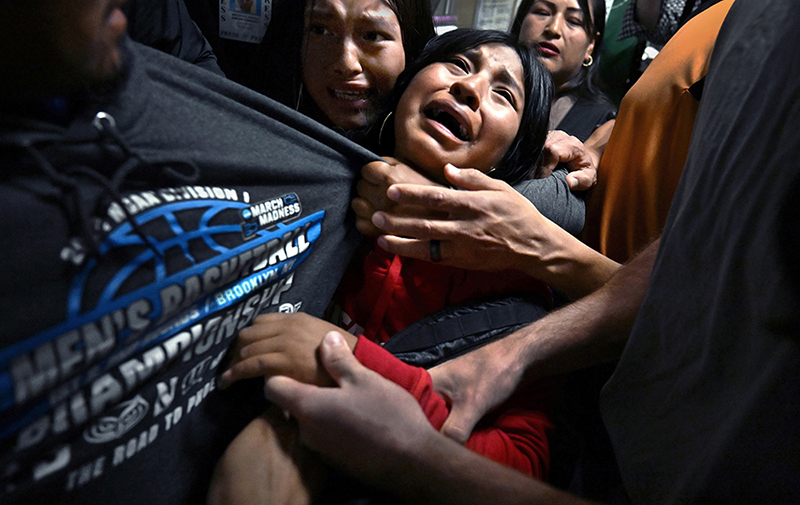
Taken inside a federal building in New York, the photograph shows a father being taken into custody following an immigration court hearing while his wife and children remain behind in visible distress. The stark institutional setting contrasts with the emotional intensity of the moment.

Guzy and a small group of photographers were granted limited access to document the proceedings, returning multiple times. The resulting work reflects not only a single encounter, but also a broader system and its impact on families.

The ongoing crisis in Gaza is reflected in several finalist images, including Aid Emergency in Gaza by Saber Nuraldin, which shows people scrambling onto a truck carrying humanitarian supplies.
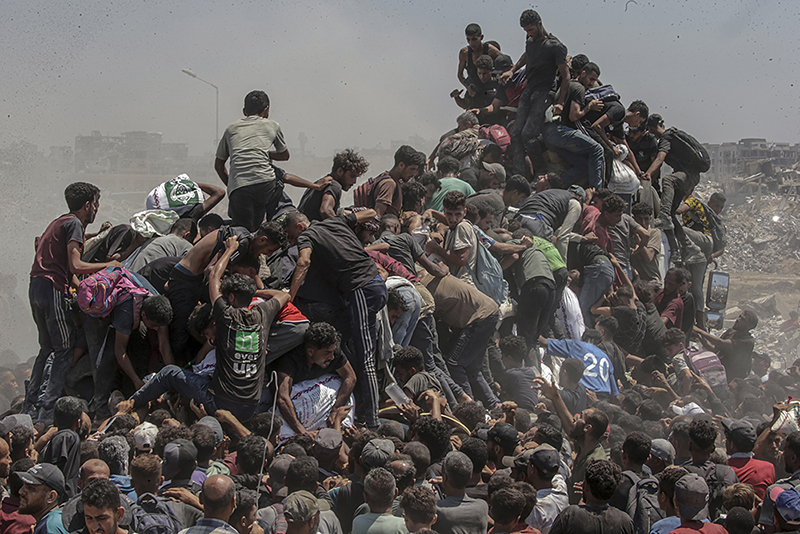
Title: Aid Emergency in Gaza Credit: © Saber Nuraldin, EPA ImagesCaption: Palestinians climb onto an aid truck as it enters the Gaza Strip via the Zikim Crossing in an attempt to get flour, during what the Israeli military called a “tactical suspension” in operations to allow humanitarian aid through. 27 July 2025.Story: In 2025, famine took hold amid what an independent UN Human Rights Commission inquiry has concluded is a genocide in Gaza. Israel disputes this. Israeli authorities imposed a complete aid blockade in March, a tactic described by humanitarian organizations as the weaponization of starvation. When international pressure led to a partial reopening of crossings in May, most deliveries went through the Gaza Humanitarian Foundation (GHF), established by the US and Israel to bypass the UN-led aid system. Its operation, which put military personnel in charge, was widely condemned by global human rights and legal organizations as unethical and in violation of international law. The UN reports that between late May and early October, at least 2,435 Palestinians were killed seeking food at or near GHF collection points. The GHF shut down when a fragile ceasefire went into effect in October. Despite some aid entering Gaza, more than 75% of the population still faced hunger and malnutrition in December. The photographer was born in Gaza and has documented life there since 1997.


In contrast, The Trials of the Achi Women by Victor J. Blue (below) presents a quieter moment of legal resolution for Indigenous women in Guatemala City, focusing on dignity and endurance rather than conflict itself.
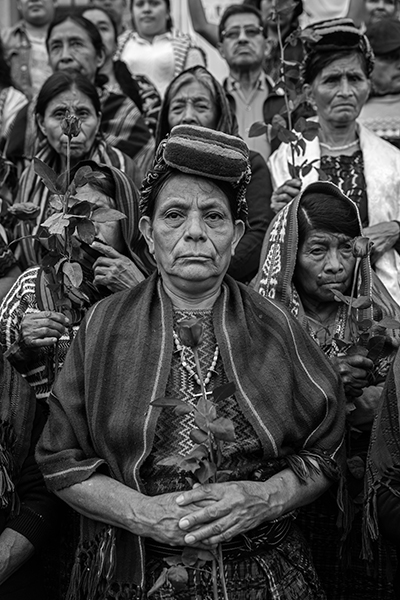
Title: The Trials of the Achi WomenCredit: © Victor J. Blue, for The New York Times MagazineCaption: ​​Doña Paulina Ixpatá Alvarado stands with other Achi women outside a Guatemala City court. That afternoon, three ex-civil defense patrollers were found guilty of rape and crimes against humanity and sentenced to 40 years in prison each. Guatemala City, Guatemala, 30 May 2025.Story: For four decades, a group of Indigenous Maya Achi women in Rabinal lived in the same communities as the men who had raped them, sometimes as neighbors. Guatemala’s civil war led to the genocide of thousands of Maya Achi people by the military and local state-backed paramilitary forces, who used sexual violence as a systematic weapon to subjugate Indigenous communities. In 2011, 36 women broke their silence, launching and winning a 14-year legal battle against their abusers. Their collective resilience is transforming a legacy of wartime impunity into a historic victory for justice.

A wider lens on global change

Together, the selection points to a broader shift in focus across this year’s contest, with photographs centred less on events alone and more on lived experience.

Global jury chair Kira Pollack noted the range of approaches, from breaking news photography to long-term documentary work, unified by an effort to reveal stories that might otherwise go unseen.

The regional judging system is particularly visible in Asia Pacific, where participation continues to grow. The region’s selections span environmental change, cultural tradition and scientific collaboration, including a rare camera-trap image of a wild panda captured after years of fieldwork.

Climate and everyday resilience

One of the most striking winning images is Bondi Beach Terror Attack by Edwina Pickles of The Sydney Morning Herald (below).
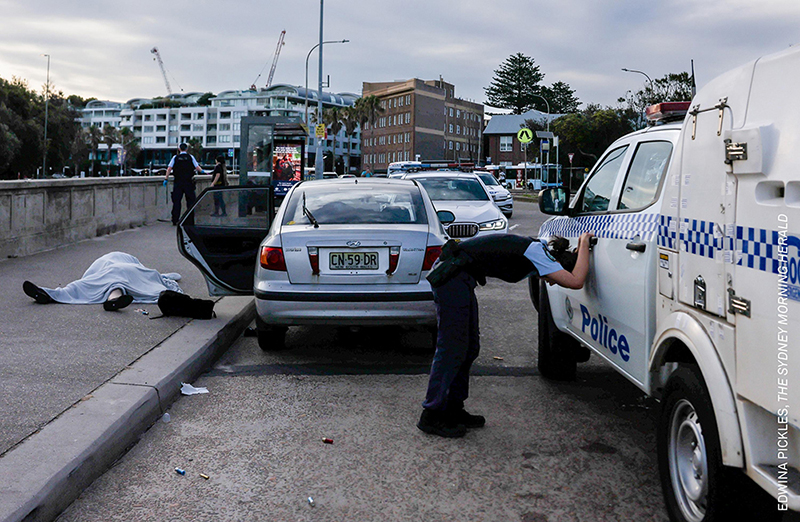
  Title: Bondi Beach Terror Attack Credit: © Edwina Pickles, The Sydney Morning HeraldCaption: An overwhelmed police officer leans over near the bodies of Boris (69) and Sofia (61) Gurman. During the Bondi Beach Terror Attack, the couple were killed while attempting to disarm one of the shooters. Sydney, Australia, 14 December 2025.Story: During Bondi Beach’s 'Chanukah by the Sea,' a community event celebrating the Jewish holiday, two armed men motivated by ISIS ideology attacked participants, killing 15 people. The first victims were Boris (69) and Sofia (61) Gurman, a Ukrainian-Jewish couple who had migrated to Australia decades earlier. Dashcam footage revealed that Boris approached one of the attackers and successfully wrested a rifle away. Shortly after, Syrian-Australian shopkeeper Ahmed al-Ahmed charged the second gunman and disarmed him. In their struggles against the gunmen, al-Ahmed was shot twice and wounded, and the Gurmans were killed. According to authorities, these collective acts of defiance delayed the shooters and saved lives.Prime Minister Anthony Albanese called the mass shooting an antisemitic attack and the deadliest terrorist incident on Australian soil ever. The shooting has prompted a significant re-evaluation of public security and religious freedom protections in Australia.

Taken in the aftermath of an attack during the Chanukah by the Sea event in Sydney, the photograph shows an emotionally overwhelmed police officer near the bodies of victims Boris and Sofia Gurman. The image was recognised for its emotional intensity and its powerful depiction of both chaos and human cost.

Australia is also represented in The Last Dolphin Hunters, a project by Australian photographer Matthew Abbott, working with Oculi for The New York Times.
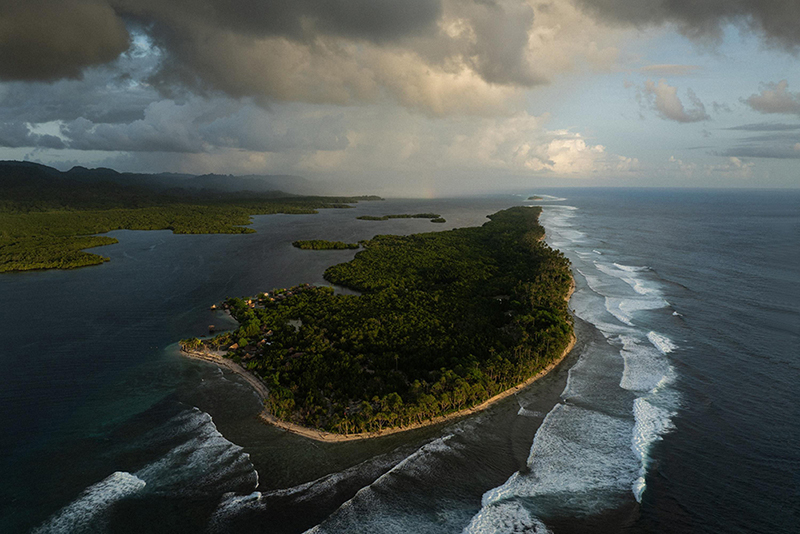
Title: The Last Dolphin HuntersCredit: © Matthew Abbott, Oculi, for The New York TimesCaption: Fanalei Island has been reduced to a narrow strip of sand and coral by rising seas. Residents believe the settlement, once home to dozens of families, will become uninhabitable in the near future. South Malaita, Solomon Islands, 6 February 2025. Story: Fanalei, a low-lying island in the Solomon Islands, stands at a crossroads between contested tradition and a changing economy. For generations, dolphin hunting provided food and income, with dolphin teeth used as ritual currency for bride-price and other forms of local exchange. Today, as rising sea levels displace the community and threaten its future, seaweed farming is providing an economic alternative to the seasonal hunt. As seaweed farming expands, fewer people are available for the collective efforts upon which dolphin hunting depends. This story captures a community reshaped by environmental pressure and shifting traditions.

The work explores traditional dolphin hunting practices in Indonesia and the complex relationship between coastal communities and the sea, where subsistence, cultural tradition and ethical debate intersect. It stands out for its restrained yet confronting perspective on a practice that remains at the centre of global conversations around conservation, heritage and survival.

In Wedding in the Flood, Aaron Favila shows a couple continuing their ceremony in rising floodwaters in the Philippines, while A Desperate Plea by Tyrone Siu captures a moment of personal loss during a building fire in Hong Kong.
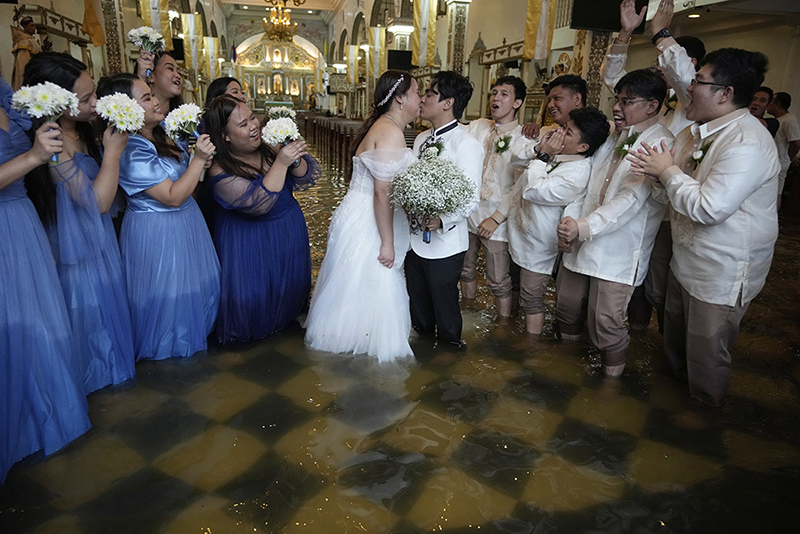
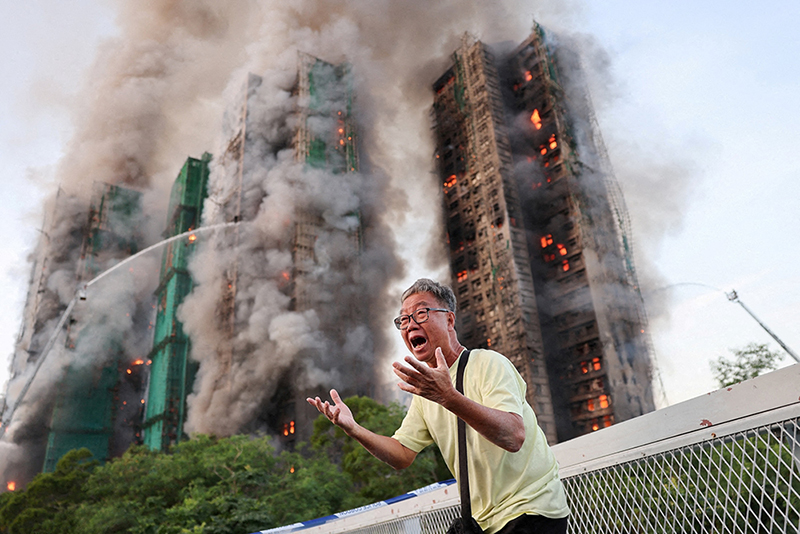
Title: Wedding in the FloodCredit: © Aaron Favila, Associated PressCaption: The newlyweds share a kiss as guests cheer. The couple have been together for ten years. According to Verdillo, “This is just one of the struggles that we’ve overcome.” Malolos, Bulacan province, Philippines, 22 July 2025.Story: When Typhoon Wipha hit the Philippines and flooded Barasoain Church, Jade Rick Verdillo and Jamaica Aguilar faced a difficult decision: should they cancel their wedding or proceed with the marriage? The couple carried on despite high waters, a testament to love and resilience in the face of severe weather. Located on a delta, Bulacan province is vulnerable to more frequent and extreme floods caused by aging drainage systems, dredging projects, overextraction of groundwater, and climate change.


 On tour in Australia

Following the announcement of the winners, the images have been travelling as part of a global exhibition, which began in Amsterdam and is continuing to more than 60 cities worldwide, most recently at the Brisbane Powerhouse in June and now in Sydney at the State Library of NSW until July 19; Ballarat is the location for regional Victoria’s first showing of the contest from August 8 to September 20, hosted by the Art Gallery of Ballarat at the Mining Exchange.


Writer Ellen Boonstra is Business Acumen magazine’s roaming Asia correspondent.


ends