
 How to resolve AdBlock issue?
 The stages before ‘yes’
By Jeff Purser
I THINK we spend far too much time studying the moment someone says yes.
In business, that’s the moment we celebrate. The contract gets signed, the proposal is accepted, or someone finally agrees to the idea we’ve been talking about for the last six months. Then we go back and analyse the presentation, the negotiation and the final meeting as though that’s where the decision was made.
I’m not sure it was. I've spent a large part of my career selling sponsorships, ideas, films and, occasionally, myself, and when I think about the important decisions I've been involved in, most of them were moving in a particular direction long before anyone actually agreed to anything. 
The yes was simply the moment everyone could finally point at. The more interesting stuff had already happened.
You notice this more easily when you’re on the other side of it. We’ve all met someone who tries to sell to us within the first five minutes. Sometimes the product is good and the person is perfectly likeable, but something still feels wrong.
For years I thought that was because people don’t like being sold to. Actually, I’m not sure that’s right. People are perfectly happy to buy things. What they don’t like is being asked to make a decision before they’ve caught up with the person asking them to make it.
Learning from getting it wrong
I learned this, like most things I’ve learned in business, by getting it wrong.
In sponsorship sales I’d occasionally walk into a meeting knowing I had a strong idea. I’d done the research, knew the audience and could see exactly why the partnership made sense.
The problem was that I was already at the end of the story and the person sitting opposite me was still on page one. So, I’d explain harder. More data, more examples, another slide. If they hesitated, I assumed they hadn’t understood, which meant my obvious job was to give them even more information. There were probably meetings where the poor bastard needed a compass and a packed lunch just to find his way through my argument.
The funny thing is, I thought I was being persuasive. I now think most meaningful decisions move through a series of stages, although I don’t mean one of those neat five-step sales processes with coloured boxes and arrows. I’ve sat through enough of those presentations to last me several lifetimes. I mean something much more human. Someone has to become comfortable enough to stay in the conversation, then curious enough to pay attention. Somewhere in there attention starts becoming connection and, if you’re any good, connection eventually becomes trust. Only then does commitment become a realistic possibility. 
Steve Jobs knew this
Steve Jobs understood this better than most. People remember the black turtleneck, the standing ovations and the famous “one more thing”, but I don’t think the reveal was his real gift.
His gift was everything he did before it. He built anticipation and slowed people down. He gave the audience enough to become curious without immediately satisfying the curiosity. By the time the product appeared, people weren’t sitting there coldly comparing processor speeds. They wanted to see what was behind the curtain. The reveal wasn’t the persuasion. It was the reward.
I’ve seen the same thing happen in boardrooms, although usually with fewer black turtlenecks. The people who build support for an idea aren’t always the ones with the best argument. Often, they’re simply better at understanding where everyone else is in the conversation.
Someone hesitates and most of us treat that hesitation as disagreement. We start answering questions they haven’t asked or solving concerns they may not even have. Sometimes the person isn’t against the idea at all. They just haven’t travelled as far with it as we have.
Actually, I reckon I’ve lost more opportunities through mistiming than through bad ideas. That’s uncomfortable to admit because bad ideas are easier to blame. You can tell yourself the market wasn’t ready, or the client didn’t get it. It’s harder to look back and realise they might have got there if you’d stopped dragging them towards the finish line.
For a long time, I confused understanding with readiness. Give someone enough facts and surely the right decision becomes obvious.
But people aren’t spreadsheets. They can completely understand an idea and still not be ready to move, which is probably why the ‘yes’ itself has become less interesting to me over the years. By the time it arrives, most of the important work has already happened. The room feels right, curiosity has done its job and trust has quietly appeared somewhere along the way.
Then someone says yes, and we all congratulate the closing technique. I suspect we’ve been studying the wrong moment.
ABOUT THE AUTHOR
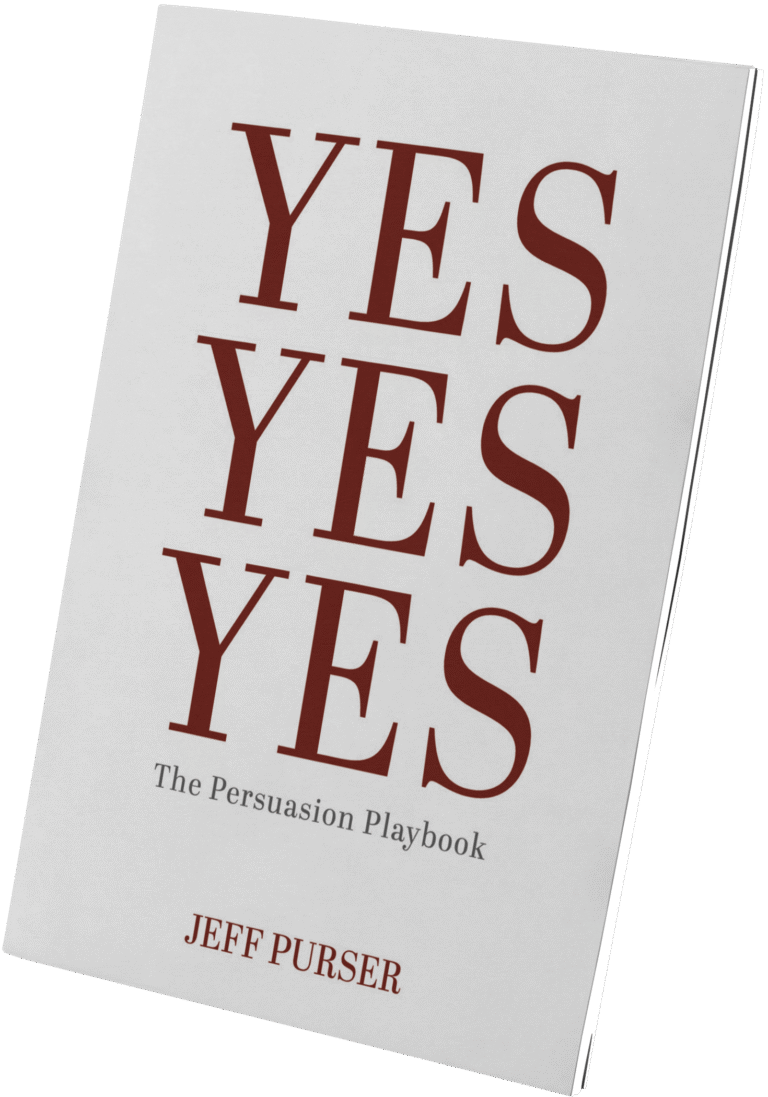
Jeff Purser is a communications strategist and commercial director with more than two decades of experience across sport, media and entertainment. His career includes senior roles connected to the Olympic Games, the South Sydney Rabbitohs and Optus Television. He has produced feature films including Fat Pizza and Cedar Boys and advised senior executives within major media organisations. He is the author of Yes Yes Yes: The Playbook of Persuasion, now available on Amazon. Turn to Research and Books for a preview of Yes Yes Yes: The Playbook of Persuasion.
ends